
The complete guide
Chocolate Whey Protein Powder, A Plain Buyer's Guide
The problem with buying protein powder
Protein powder is one of those products where the tub tells you very little and the internet tells you far too much. You pick up two containers that look almost identical, and one costs twice as much. The label on the front is covered in words. The label on the back has the actual information, and it is in smaller print.
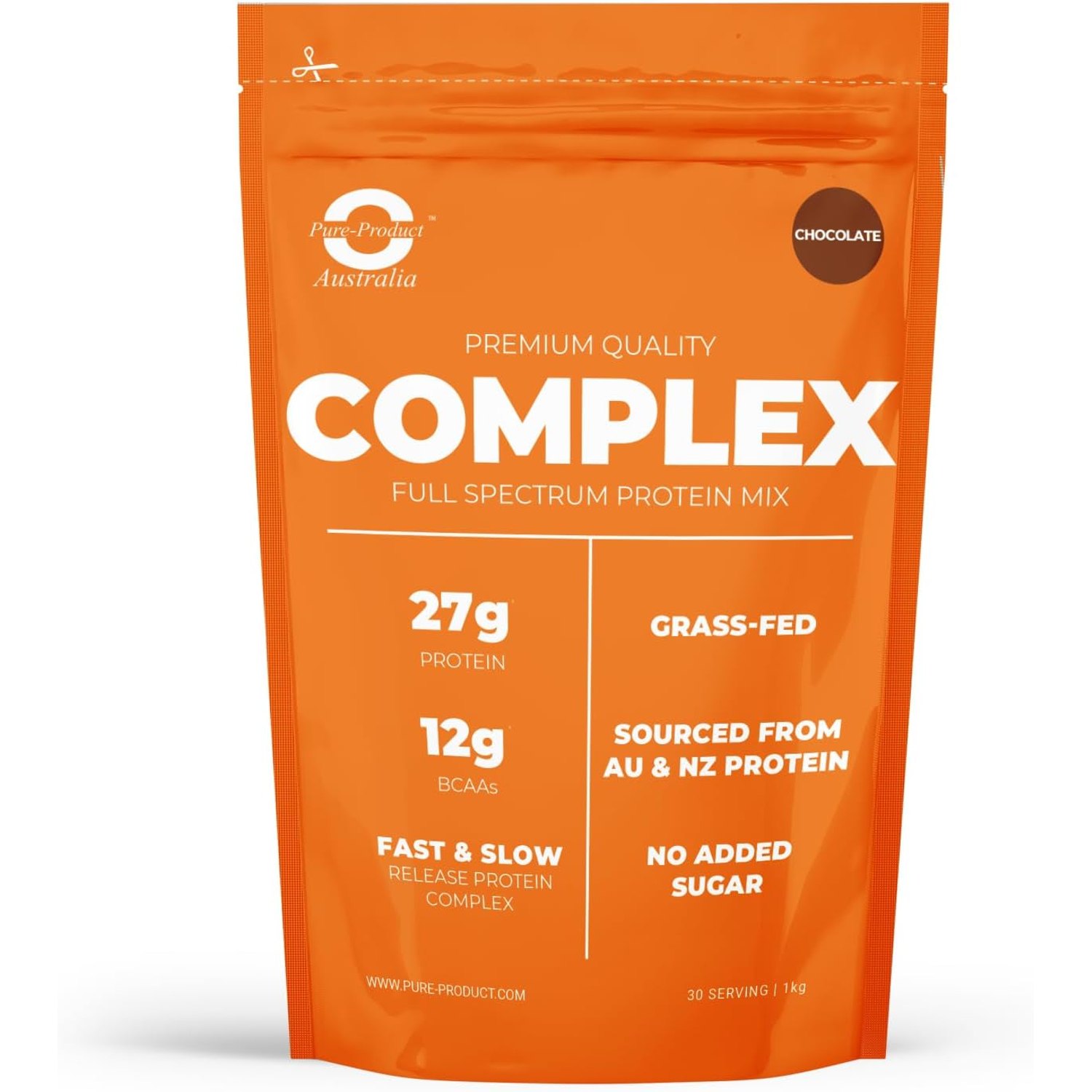
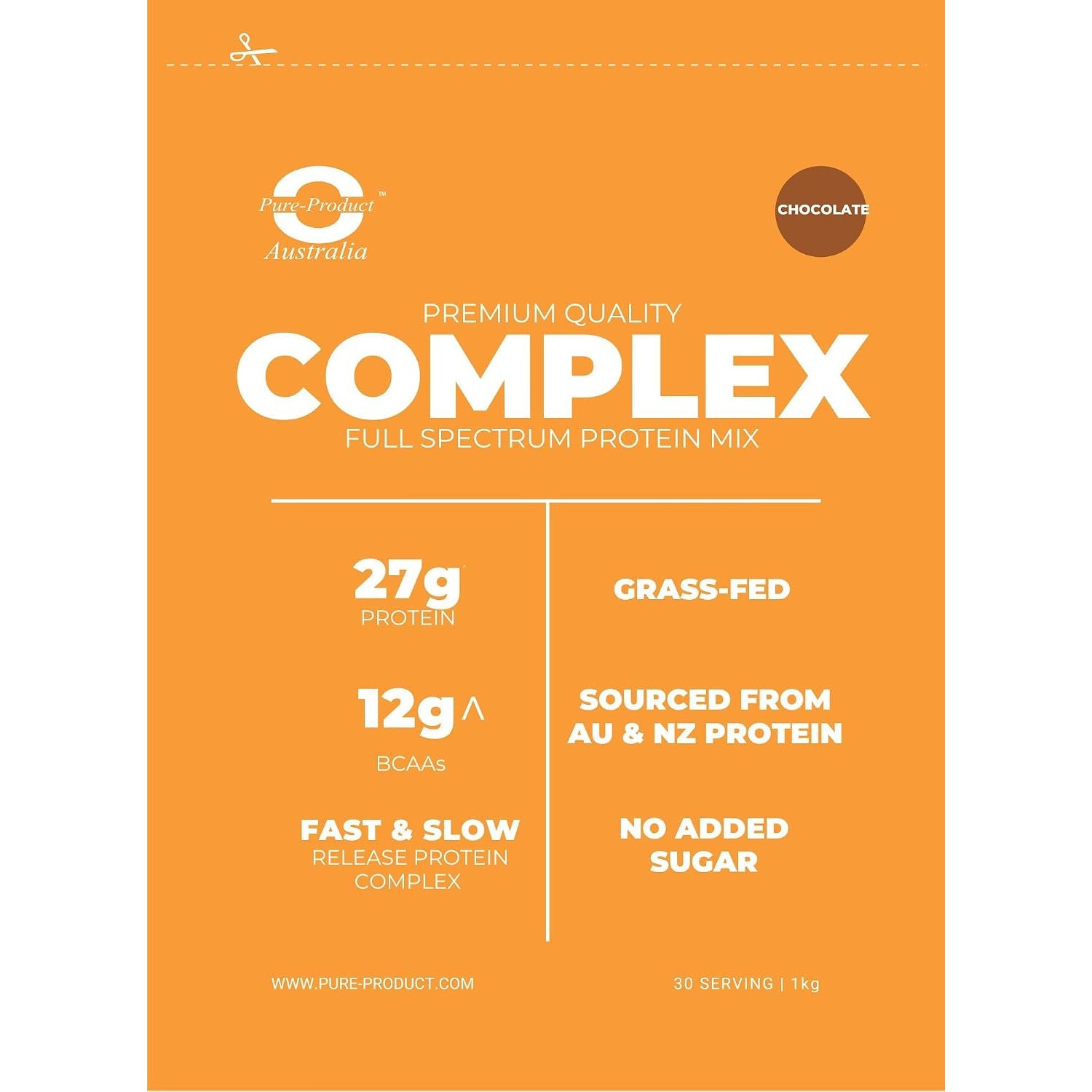
This page is written the other way around. The useful facts come first, and nothing gets added that is not on the maker's own information. What you are looking at is a 1 kg tub of chocolate whey protein powder, made in Australia. The protein in it comes from three dairy sources, blended together. The flavouring is cocoa and the sweetener is stevia extract. That is it.
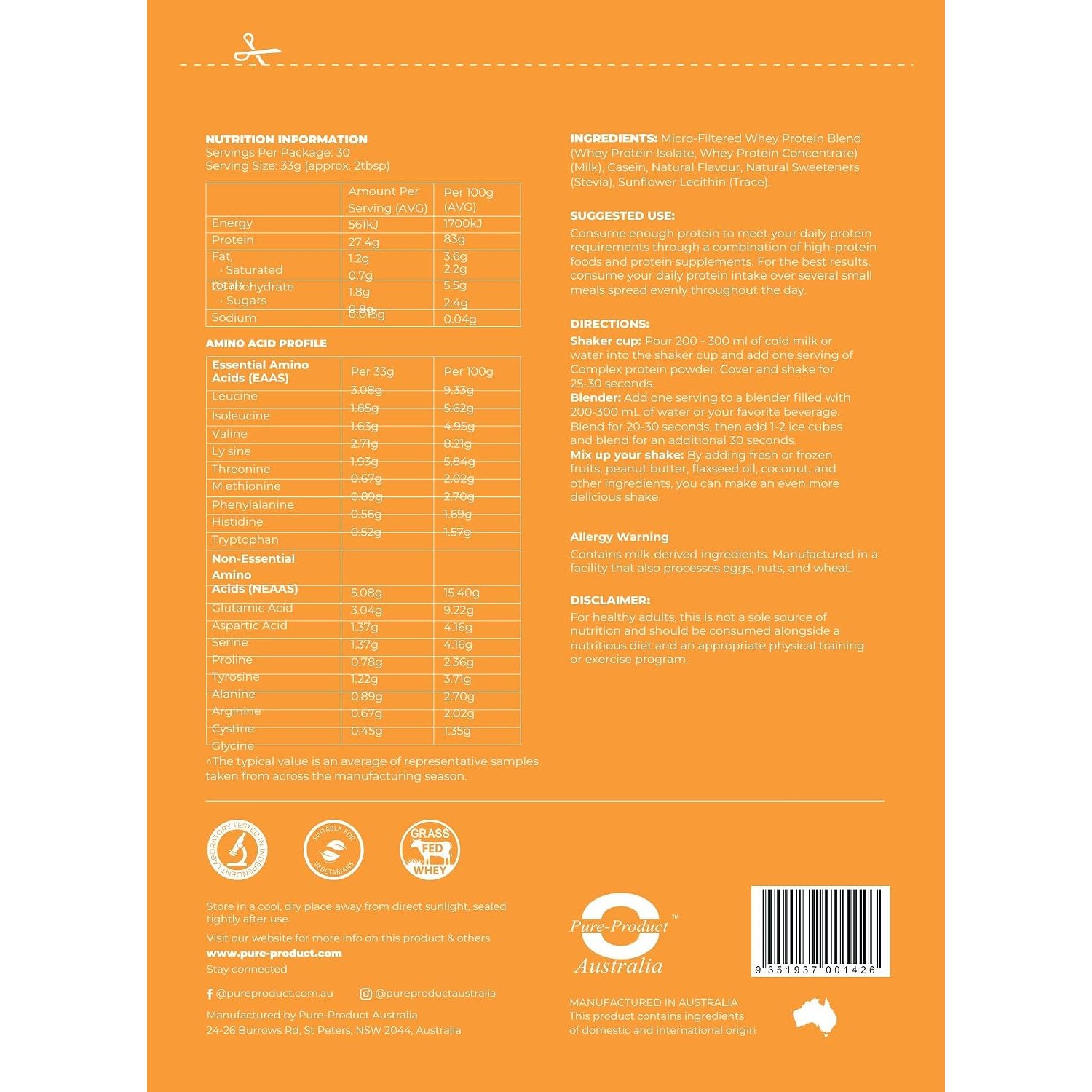
The pack label that arrives with your order is always the final authority on ingredients, allergens, nutrition and directions, so read it before you use the product. Nothing on a web page replaces that.
What is actually in the tub
The maker lists the ingredients as whey protein isolate, whey protein concentrate, micellar casein, flavouring, sweetener (stevia extract) and cocoa.
Three of those are proteins, and they all come from milk. Whey protein isolate and whey protein concentrate are both whey, processed to different degrees. Micellar casein is the other main protein found in milk. Putting them together is what makes this a whey and casein protein blend rather than a single source powder.
The rest of the list is short. Cocoa and flavouring give it the chocolate taste. Stevia extract is the sweetener, which comes from a plant rather than sugar or a synthetic sweetener. People have strong opinions about stevia, and you will know within a shake or two which camp you are in.
Because every protein in the blend is dairy derived, the allergen information states that the product contains milk. If you are avoiding dairy for any reason, this is not the product for you.
How it mixes, and why it is thick
The maker's directions are simple. Mix one 30 g scoop with 300 to 400 ml of water.
Then comes the useful bit of guidance the maker adds: micellar casein is very thick, so add more or less water to reach the consistency you want. That is worth taking seriously. If you have only ever used a pure whey isolate before, which tends to go thin and almost juice like, this will feel different in the glass. It sits heavier.
If you like a thick chocolate protein shake, stay at the lower end of the water range. If you want something lighter, go past 400 ml. Nobody is checking. The 30 g scoop protein powder measure stays the same either way, you are only changing how much water surrounds it.
A few practical things help. Cold water mixes better than warm. A shaker bottle with a wire ball or a mixing disc does a better job than stirring with a spoon. And giving the shake a minute to sit after shaking lets the powder hydrate properly, which usually smooths out any grain.
Is a blend right for you?
This is where most guides start making claims. We are not going to. What we can do is explain the difference in plain terms so you can decide.
A single source powder contains one type of protein. A mixed source protein powder, like this one, contains more than one. In this case you get whey protein isolate powder, whey protein concentrate powder and micellar casein powder together in the same scoop.
The practical difference you will actually notice is texture. A casein containing blend makes a thicker drink. Some people like that because it feels more substantial. Others find it heavy and prefer a thinner shake. That is a personal preference and not a quality judgement.
Beyond texture, we are not going to tell you what a blend does or does not do, because that would be a claim, and claims about what a food does belong on a label written by the maker, not on a shop page.
Who it is not for
This is a sports food, and sports foods carry a clear limitation. They are not suitable for children under 15 years of age, and they are not suitable for pregnant women. They should be used in conjunction with a balanced diet, not in place of meals.
That is not fine print we are hiding at the bottom. It is one of the first things worth knowing before you buy, especially if you were thinking of this as a gift or as something to share around the house.
Add to that the allergen point. The product contains milk. If anyone in your household has a dairy allergy, keep this tub well away from them and read the pack allergen statement in full.
If you have a health condition, take medication, or are unsure whether a sports food fits your situation, ask a qualified health professional. We cannot answer that question for you and we will not pretend to.
Choosing a pack size
One kilogram is a middle sized tub. Smaller packs are handy if you are unsure whether you will like the flavour, but you pay more per use and you end up reordering constantly. Very large packs cost less per serve but sit open for a long time, and the longer a powder stays open the more chance there is for moisture and clumping.
A 1 kg protein tub lands in a sensible spot for regular use. It fits in a kitchen cupboard without hogging a shelf, and if you use it steadily it will not sit around for months once opened.
If you are completely new to stevia sweetened protein powder, that is the one thing worth thinking about before committing to a kilo. Stevia has a distinctive finish. Most people adjust quickly. A few never warm to it. Only you know which you are likely to be.
Looking after it
Storage is boring and it genuinely matters. Powder is hygroscopic, which is a long way of saying it pulls moisture out of the air.
Keep the tub somewhere cool and dry. Not next to the kettle, not above the stove, not on a windowsill that gets afternoon sun. Close the lid firmly every single time. Keep the scoop inside the tub and keep it dry, because a damp scoop going back into dry powder is the most common cause of clumping.
Use dry hands and a dry shaker. If you rinse your shaker, dry it properly before the next scoop goes in.
Any storage instructions printed on the pack override this general advice. They always do.
Delivery and returns, briefly
We dispatch within 2 working days, and delivery then takes up to 7 working days by tracked courier. Delivery is within Australia only.
Change of mind returns are accepted within 14 days of delivery, on unopened and sealed packs only. That restriction is standard for food and is about hygiene rather than inconvenience. If an item arrives faulty or damaged, it is put right under the Australian Consumer Law. No separate warranty is sold with this product.
If something is wrong with your order, message us with your order number and a photo of the problem. That is usually enough to get it sorted on the first reply.
The short version
A 1 kg tub of chocolate protein drink mix made in Australia. The proteins are whey protein isolate, whey protein concentrate and micellar casein. The flavour is cocoa, the sweetener is stevia extract, and the whole ingredient list is six items long.
Mix a 30 g scoop with 300 to 400 ml of water, more water for a thinner shake, less for a thicker one. Expect it to be heavier than a plain whey shake, because of the casein.
It contains milk. It is not suitable for children under 15 or for pregnant women, and it is meant to be used alongside a balanced diet. The label on the pack is the final word on ingredients, allergens and directions, so read it before you use it.
If that all sounds like what you were after, the tub is ready to ship.