
The complete guide
A Buyer's Guide to Organic Psyllium Husk Flakes
Choosing a pantry ingredient can be harder than it looks. Similar names may describe different forms, and a recipe that calls for powder may not mean whole husk flakes. Before buying, it helps to know exactly what is listed and how you plan to use it.
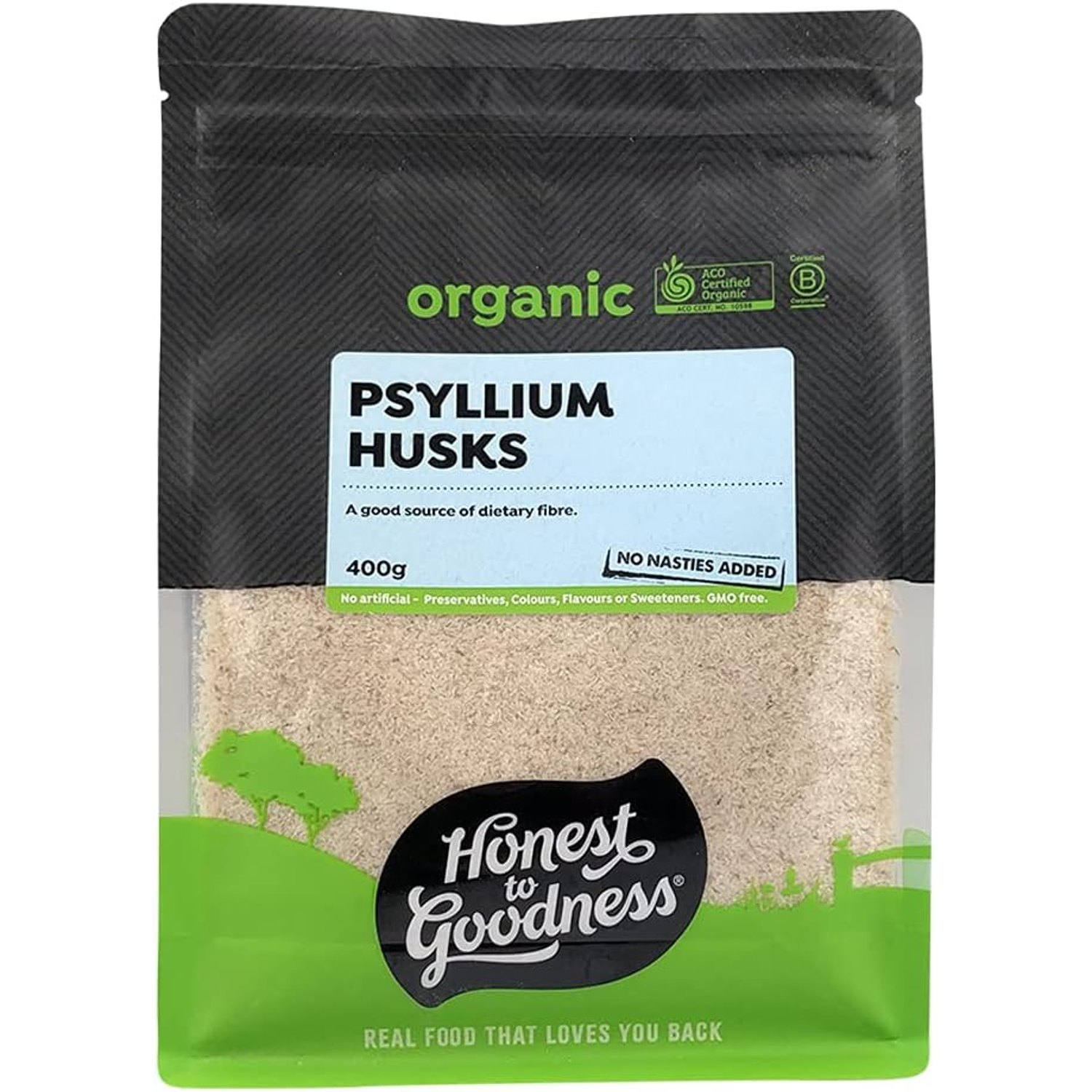
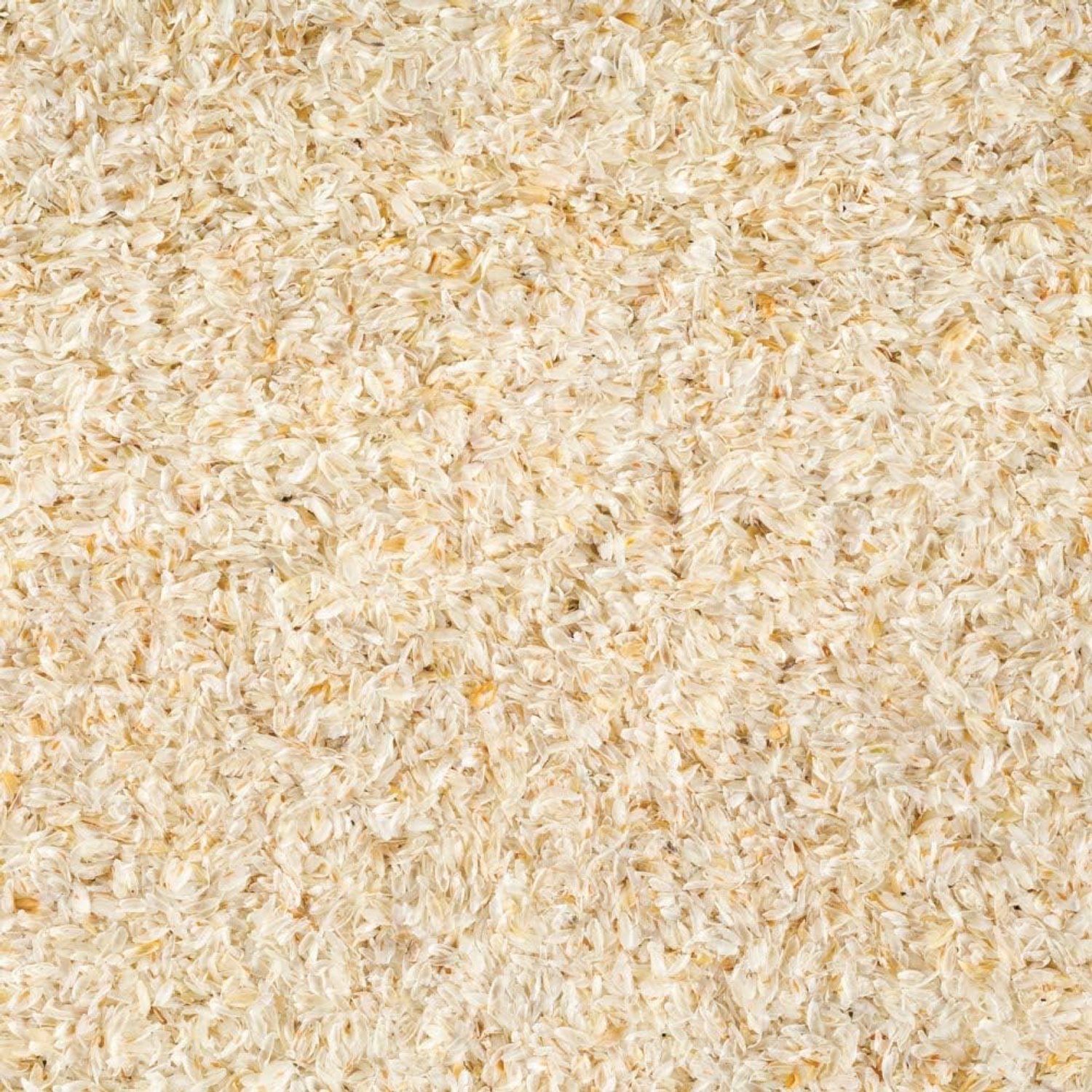
Organic Psyllium Husks 400 g is supplied in flake form. Its suggested uses range from sprinkling over breakfast foods to thickening soups and sauces. This guide explains those uses, the details worth checking and the information that still needs to come from the pack label.
Start with the ingredient and its form
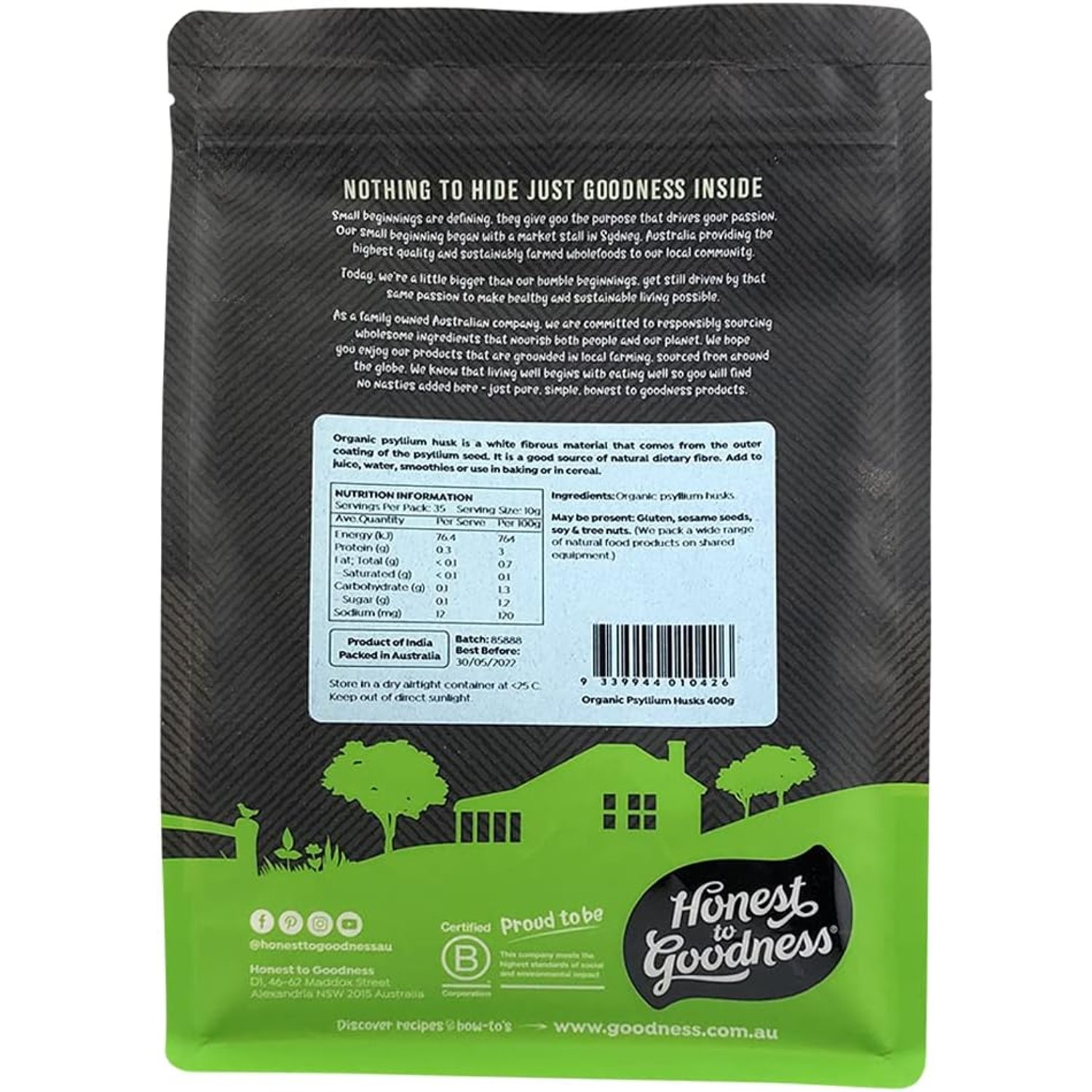
Psyllium husks come from the outer coating of the psyllium seed. The ingredient listed for this pack is organic psyllium husks, and the item form is flake. India is the stated country of origin.
Those are useful starting points when comparing products. This is husks, not a product described as psyllium powder. If you have a recipe open beside you, check the wording before placing an order.
The word organic appears in the product name and ingredient listing. The maker gives no certification details in the maker's description. If a particular certification matters to your purchase, confirm it from the pack information rather than reading more into the name.
What the husks do in food
The supplied uses include thickening soups, sauces, curries and smoothies. That makes texture the main cooking detail to consider. Think about the dish you want to make and whether its recipe calls for psyllium husks.
No thickening ratios are provided here. There is also no stated conversion from flour, starch or another thickener. It would be easy to guess a spoon-for-spoon swap, but that guess would not come from the supplied directions.
A recipe written for whole psyllium husks is a clearer starting point than one written for a different ingredient. Read it alongside the pack label. If the directions do not match, resolve that difference before preparing the food.
Using psyllium with breakfast foods
Muesli, porridge and yoghurt are all named as foods to sprinkle the husks over. These are straightforward uses to consider if you already keep those foods in your kitchen.
When choosing psyllium for porridge, the form still matters. Check whether your recipe means flakes or powder, and use the pack directions for preparation and quantity. This page does not provide a breakfast serving amount.
The same care applies to psyllium for yoghurt or muesli. A suggested food pairing tells you where the ingredient may be used, but it is not a full recipe. It does not establish a portion size or a daily routine.
If you are buying for someone else in the household, make sure they can read the pack information too. Ingredients, allergens and preparation directions should be checked by the person who will use it.
Choosing it for soups, sauces and curries
A thickening ingredient should match the recipe, not just the name of the finished dish. Soup can mean many different textures, and the maker's details does not say how much husk to use for any one of them.
Psyllium for soups is a listed option, as is psyllium for sauces and curries. What is missing is a method with measured amounts, mixing steps and timings. Those details need to come from the label and an appropriate recipe.
If your main reason for buying is a specific sauce, check that recipe first. Look for the exact ingredient form and quantity it requests. This small step can help you avoid ordering a flake product when the recipe was written around powder.
Do not treat the list of suggested uses as a promise about every recipe. It describes possible cooking uses, not a tested result for a dish you have not yet chosen.
Smoothies and the supplied drink suggestion
Smoothies appear in the supplied list of thickening uses. If you are comparing psyllium for smoothies, consider whether you have directions that name husk flakes and provide a measured amount.
The separate drink suggestion is a teaspoon added to cooled herbal tea or a glass of water. Cooled matters here. The maker's details does not give a method for adding the husks to hot tea.
That teaspoon suggestion is not a stated daily serving schedule. It should not be turned into one, and it does not establish how many servings the pack contains.
Read the final directions on the label before preparing psyllium in water or cooled herbal tea. If the label differs from a short online description, the pack label is the final word.
Is the 400 g pack the right choice?
The listed pack size is 400 g. That gives you a clear quantity to compare with other packs, but it does not tell you how long this one will last.
To judge whether the size suits your kitchen, start with your intended recipe. Check its measured amount and how often you expect to make it. Avoid working from a serving count that has not been supplied.
There is also a difference between the food quantity and the shipping weight. The maker does not specify a packed shipping weight or package dimensions. Do not use the 400 g figure to infer either of those details.
For pantry planning, the practical question is simple. Do you already have a use for husk flakes, or are you still looking for the right recipe? Answering that first is more useful than choosing by pack size alone.
Read the label for the missing details
The online record does not include a flavour description, allergen statement or specific storage conditions. It also does not provide nutrition figures, a serving count or detailed suitability information.
A short ingredient listing does not answer every dietary question. If you need to avoid an allergen, read the full pack label before use. Do not assume that an ingredient name confirms the absence of cross-contact warnings.
Likewise, this page does not confirm suitability for children, pregnancy or a particular dietary requirement. Check all pack warnings. If you still cannot tell whether the product is appropriate, seek qualified advice before using it.
The label on the pack is the final word on ingredients, allergens and directions. Read it before opening and using the contents, rather than relying only on the product title.
Storage and everyday handling
Specific storage instructions are not given by the maker by the maker, so there is no basis for giving a shelf-life promise or a set storage temperature here. Follow the conditions printed on the pack.
Use clean utensils when handling the contents. Keep the label available so you can refer back to the directions and any storage guidance after the first use.
Before transferring any food into another container, consider how you will keep its original information with it. A plain jar does not carry the ingredient, warning or preparation details printed on the packaging.
If you share a pantry, make sure other people know where those directions are kept. This is especially useful when an ingredient can be mistaken for another product with a similar name.
Delivery, returns and buying for someone else
Delivery for this product is Australia only. Orders are dispatched within 2 working days. Delivery then takes up to 7 working days by tracked courier, so allow for both stages when planning an order.
If you need the ingredient for a particular meal or occasion, take that timing into account. The dispatch period and delivery period are separate parts of the order journey.
Change of mind returns are accepted within 14 days of delivery on unopened, sealed packs only. If you are unsure about the ingredient form or the label information, check before opening the pack.
Faulty or damaged items are put right under the Australian Consumer Law. Contact us with your order details if there is a problem.
For gifting, this is most easily chosen for someone who already uses psyllium husk flakes. Confirm their preferences first. An unfamiliar food ingredient is not a reason to guess about another person's dietary needs.
The short version
Choose this product when you want a 400 g pack of organic psyllium husks in flake form. The listed uses include breakfast bowls, thickening soups and sauces, smoothies, water and cooled herbal tea.
Check that your recipe calls for the same form. Do not assume a powder conversion, serving count or dietary suitability that has not been provided.
Most importantly, read the pack label before use. It supplies the final ingredients, allergens and directions, along with the storage guidance needed for your pantry.