
The complete guide
How To Choose And Use A Pre Workout Drink Mix
The problem with gym drinks
Most people who train end up with a shelf of half-used tubs. One tasted like cough syrup. One never dissolved properly and left grit in the bottom of the bottle. One had so much caffeine in it that an evening session turned into a 2am ceiling-staring contest. The powder itself is rarely the issue. The mismatch between what is in the tub and what the person actually wanted is the issue.
A pre workout drink mix is a simple thing on paper. It is flavoured powder you stir into water before you train. What varies between products is the list on the back, the size of the scoop, and how honest the label is about how many serves you really get. Those three things decide whether a tub becomes a staple or an expensive paperweight.
This guide walks through how to read a product like this one, what the numbers on the panel mean in practice, and how to store and use it so the last scoop tastes like the first.
What this particular product is
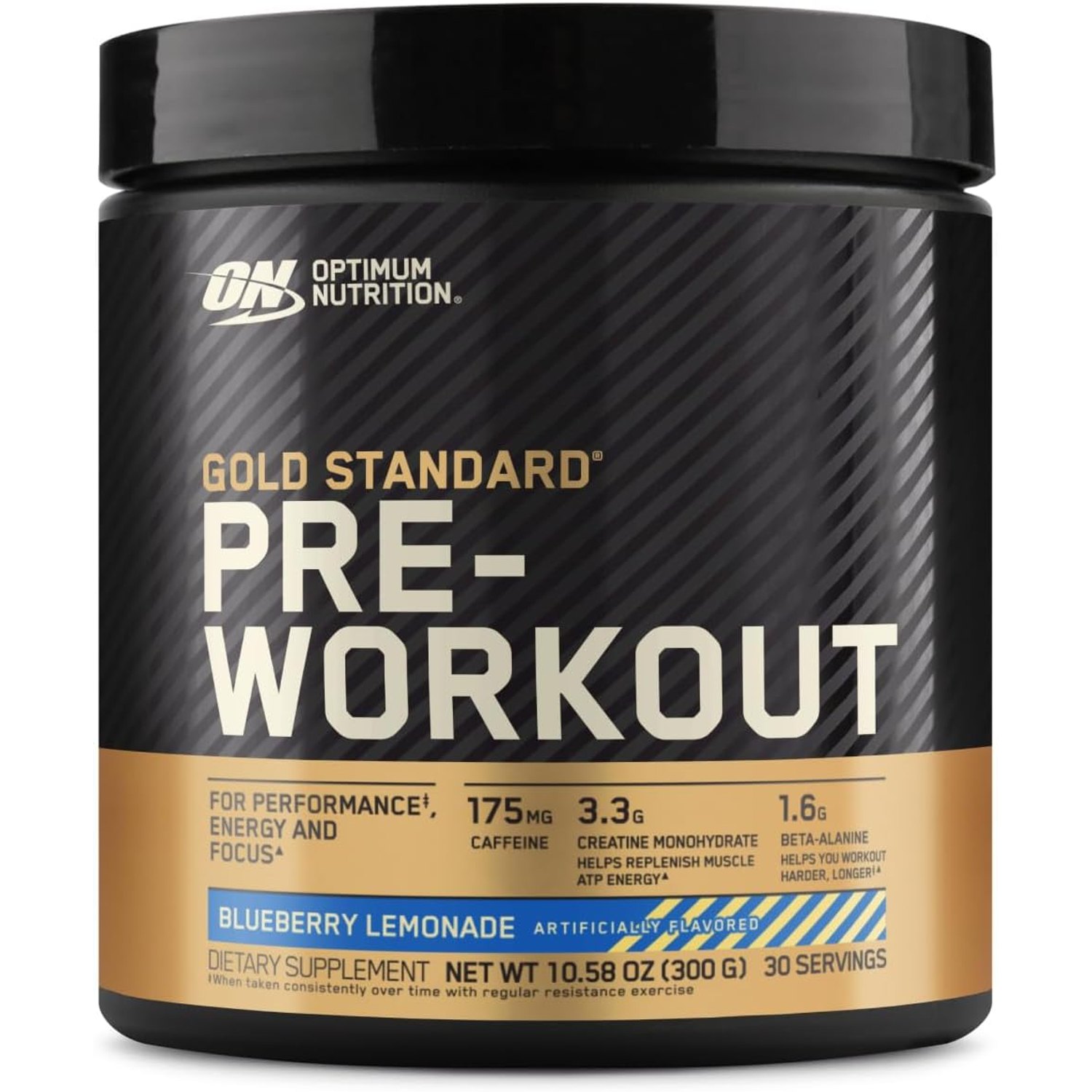
This is a 300 g tub of blueberry lemonade flavoured powder. The maker lists 30 servings per container at one 10 g scoop each. That is the whole arithmetic of the tub, and it is worth doing that arithmetic on every product you consider, because a big-looking container with a 20 g scoop can hold fewer serves than a smaller one.
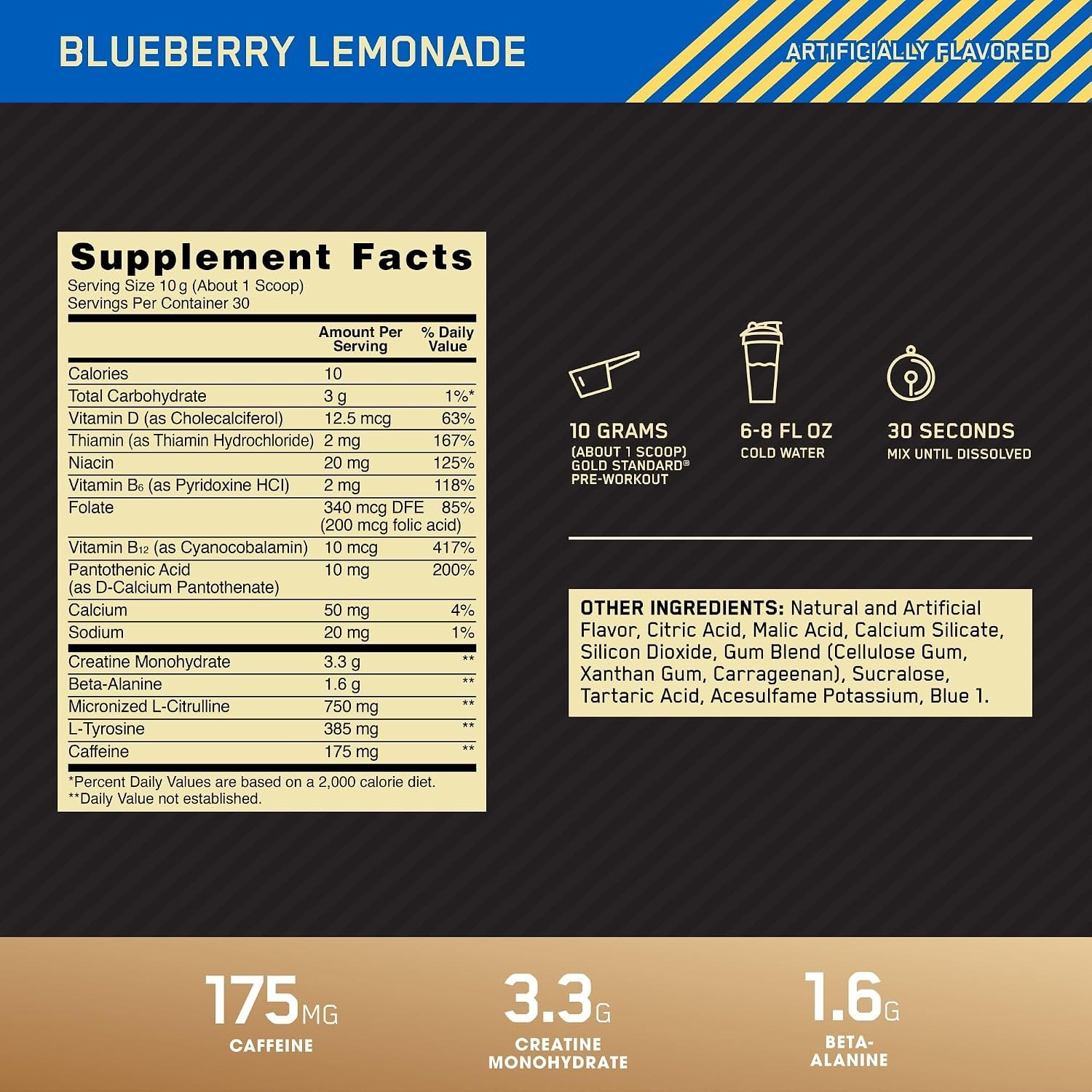
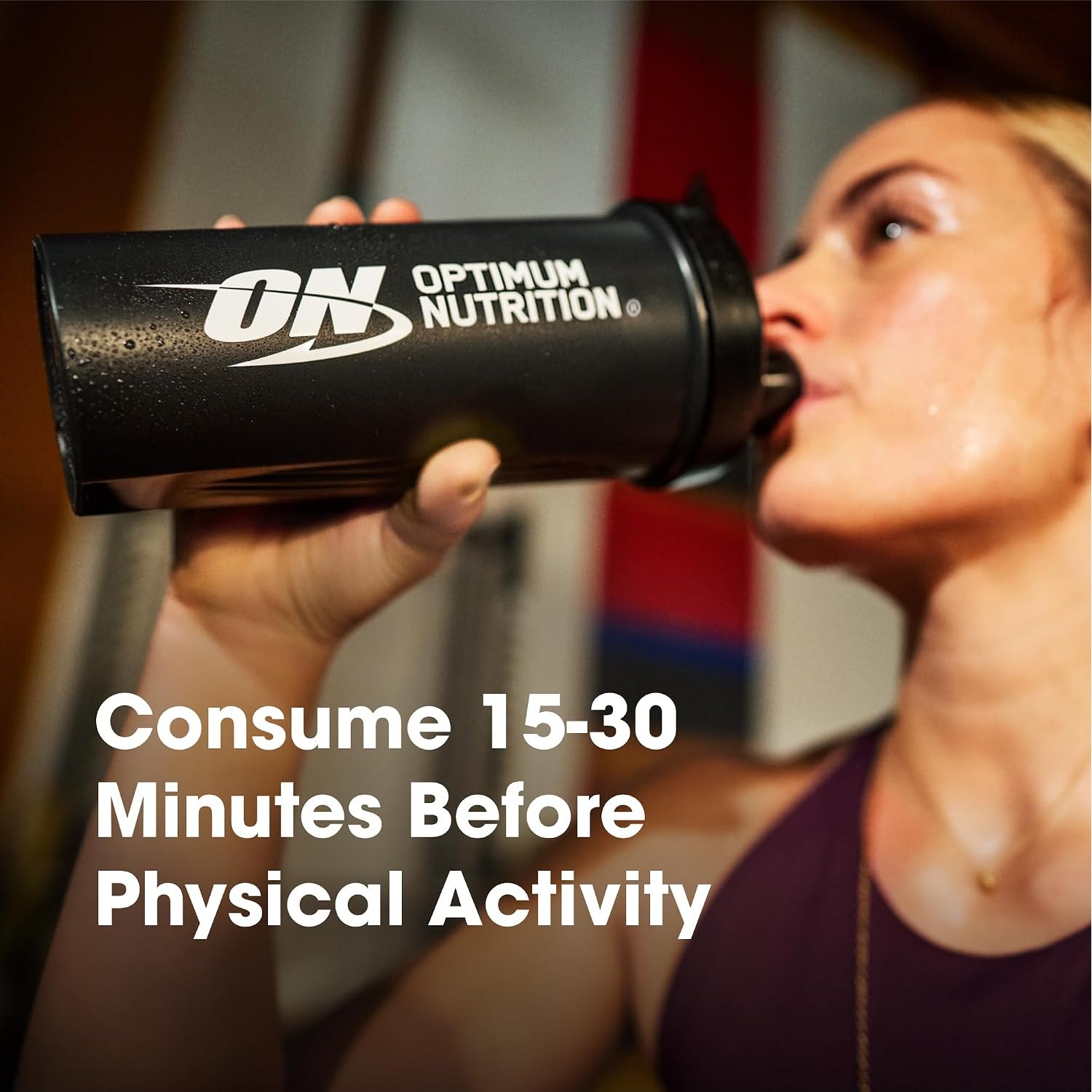
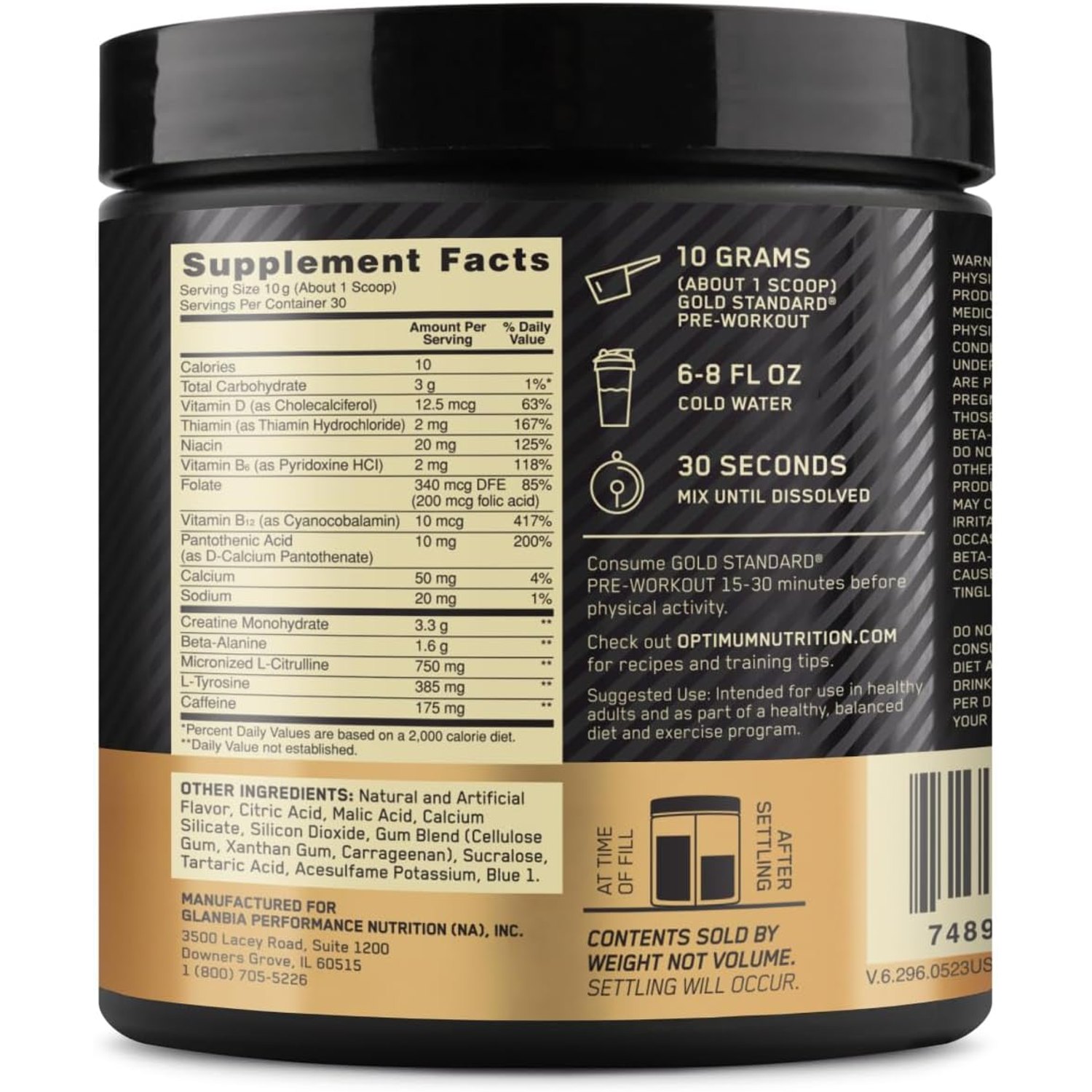
The directions printed by the maker are to mix one 10 g scoop into 180 to 240 mL (6 to 8 fl oz) of cold water and stir until dissolved, then drink it 15 to 30 minutes before physical activity. There is no loading phase described, no cycling instruction, no complicated protocol. One scoop, cold water, stir, drink.
The listed ingredient panel is reasonably detailed. The creatine blend lists creatine monohydrate at 3 g alongside a 25 mg proprietary blend of astragalus membranaceus root extract and panax notoginseng root extract. The amino blend lists beta-alanine at 1.5 g and micronised L-citrulline at 750 mg. The caffeine blend lists acetyl-L-carnitine HCl at 375 mg, N-acetyl L-tyrosine at 250 mg, caffeine at 175 mg and a citrus bioflavonoids complex at 100 mg. On top of that sit vitamin D, thiamin, niacin, vitamin B6, folate, vitamin B12 and pantothenic acid.
Everything else on the list is there for taste, texture or shelf life. Natural and artificial flavour, citric acid, cellulose gum, xanthan gum, carrageenan, sucralose, tartaric acid, malic acid, acesulfame potassium and Red 40. Allergen information lists soy. Country of origin is the USA.
We are describing what is in the tub, not what it does. The label on your pack is the final word on ingredients, allergens and directions, and you should read it before your first serve.
How to read a label properly
Start at the serving size, not the front of the pack. Front-of-pack text is designed to be read from two metres away. The serving size tells you what every other number on the panel actually refers to. Here it is 10 g, and the whole panel describes one 10 g scoop.
Next, look at the caffeine figure if there is one. This product lists 175 mg per serve. For comparison, that is somewhere in the range of a decent café coffee. If you already drink two or three coffees before lunch, adding a caffeinated pre workout powder in the afternoon stacks on top of that. Nobody can tell you your own tolerance, but you can at least count.
Then check the allergen line. Soy is listed here. Allergen statements are the one part of a label you should never skim, because they are legally required and specific. If there is a clash, nothing else on the panel matters.
Finally, look for things the label does not say. The maker does not state a brand, a tub weight with packaging, pack dimensions, or any dietary certification such as vegan or gluten free. If a detail is not printed, treat it as unknown rather than assuming. A good retailer will tell you what they do not know. A less good one fills the gap with a guess.
Flavour, and why cold water matters
Blueberry lemonade sits in the tart family. There is citric acid, tartaric acid and malic acid on the ingredient list, which is where the sharpness comes from, and sucralose plus acesulfame potassium handling the sweetness.
Cold water is specified for a reason. Tart flavours read as refreshing when cold and as sour when warm. Cold water also helps a fine powder disperse instead of forming a paste at the bottom of the bottle. If you have ever mixed a drink powder into room-temperature water and found a gluey layer at the bottom, that is the usual culprit.
The 180 to 240 mL range gives you room to adjust. At the lower end you get a concentrated, punchy drink. At the upper end it reads more like a flavoured water. Try the middle first, then move one way or the other on your second serve. A shaker with a wire ball or a plastic mesh disc will break up the powder faster than a spoon, though a spoon and a bit of patience does the job too.
Who it suits, and who it does not
The maker's own statement is clear. It is intended for use in healthy adults, as part of a healthy, balanced diet and exercise program. That last part is worth repeating, because a sports food is an addition to eating well, not a substitute for it.
Some people should steer clear. Sports foods of this type are not suitable for children under 15 years of age, and they are not suitable for pregnant women. Anyone with a soy allergy should not use this product, since soy is listed in the allergen information. If you avoid added colours, note that Red 40 is on the list. If you are caffeine sensitive, 175 mg per serve is a real number and worth respecting.
If you take prescription medication or have an existing health condition, have a word with your doctor or a dietitian before adding any sports food to your routine. That is sensible advice for any product in this category, not a comment on this one in particular.
Getting the most from a tub
Storage is where most tubs go wrong. Powdered sports foods are hygroscopic, which is a long way of saying they pull moisture out of the air. A lid left loose on a humid day, or a wet scoop put back inside, will cause clumping within a week. Keep the tub closed, keep it somewhere cool and dry, and keep the scoop bone dry between uses. Do not store it on top of the fridge or next to the kettle.
Level the scoop rather than heaping it. A heaped 10 g scoop can easily be 13 or 14 g, which means your 30-serve tub quietly becomes a 22-serve tub and your caffeine intake per drink goes up without you noticing.
Mix each serve fresh. Powders sitting in water for hours separate and the taste flattens out. Make it, drink it, rinse the bottle. A rinsed bottle also avoids the particular smell that a forgotten shaker develops by day three.
Keep an eye on the lid seal when the tub arrives. Every pack ships sealed under the lid. If yours turns up broken or the tub is damaged in transit, take a photo and get in touch rather than using it.
Delivery and returns in plain words
We dispatch within 2 working days, and delivery then takes up to 7 working days by tracked courier. Shipping is Australia only. You will receive tracking so you can see where the parcel is rather than guessing.
Change of mind returns are accepted within 14 days of delivery, on unopened and sealed packs only. That restriction exists for hygiene reasons and is standard across food products. If an item arrives faulty or damaged, it is put right under the Australian Consumer Law. No warranty is sold with this product, and we do not publish reviews, ratings or testimonials on this page.
The short version
This is a 300 g tub of blueberry lemonade pre workout powder holding 30 scoops of 10 g. One scoop goes into 180 to 240 mL of cold water, stirred until dissolved, 15 to 30 minutes before you train. The listed panel includes creatine monohydrate 3 g, beta-alanine 1.5 g, micronised L-citrulline 750 mg, caffeine 175 mg and a run of B vitamins, with soy listed as an allergen and the USA given as the country of origin.
Check the caffeine figure against the rest of your day. Check the allergen line against your own needs. Store the tub dry, level the scoop, and read the label on the pack before your first serve, because that label is always the final word.